City
Agra, Uttar Pradesh
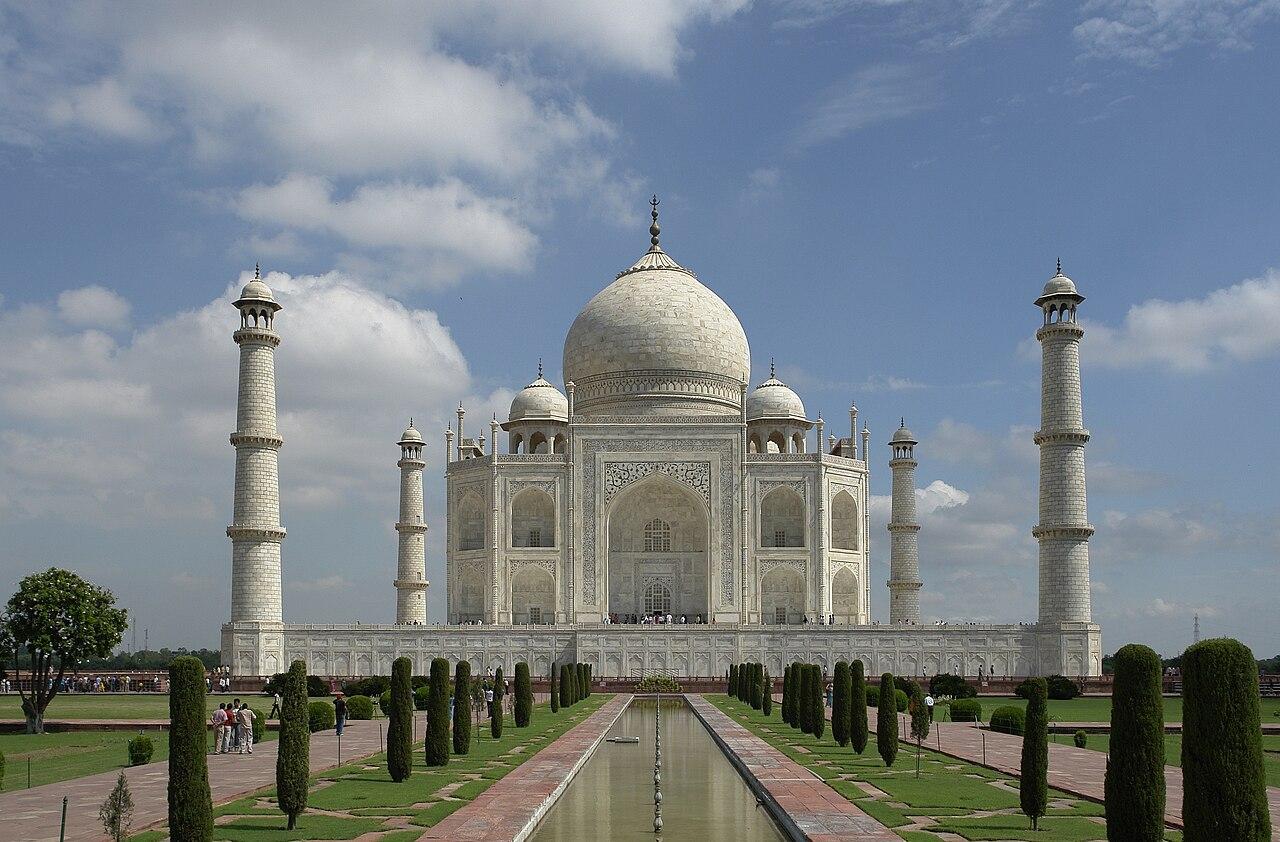
Home of the Taj Mahal. Commonly visited from Delhi by train or road.
Overview: what to see and when to go
Editorial guidance. Editorial guidance compiled from general travel knowledge. It has not yet been verified line by line against official sources, so confirm anything that matters (documents, permits, opening days, fees) with the official source before you travel.
Highlights
- The Taj Mahal (a UNESCO World Heritage Site) at sunrise or sunset
- Agra Fort
- Fatehpur Sikri nearby
- Mehtab Bagh for views of the Taj across the river
- Mughal-era food, marble inlay and leather goods
Best time to visit
October to March is the most comfortable. Winter fog can delay trains and flights, and summers are extremely hot. The Taj Mahal is normally closed on Fridays and can close for other reasons, so check before you go.
Getting around
Most visitors come from Delhi by train, road or the expressway, and many do it as a day trip, although staying overnight avoids the rush. In Agra, use app cabs, auto-rickshaws or electric vehicles near the Taj, since normal traffic is restricted close to it.
Safety intelligence
Practical risks to plan for in Agra
- Touts, aggressive guides and shop commissions are common. Book guides and tickets through official channels.
- Agree prices in advance for rickshaws and tours.
- Crowds are heavy at the Taj Mahal. Keep valuables close.
Official government advisories
Government travel advisories apply to India as a whole and sometimes name specific regions. Read the current version from your own government before booking:
- US State Department, India Travel Advisory
- UK FCDO, India travel advice
- German Federal Foreign Office, India travel advice
- Australia Smartraveller, India
- Government of Canada, India travel advice
Crime statistics for Agra (NCRB): data not yet loaded. We only publish figures that come from an official source with a year attached.
We show no combined safety score. See our methodology.
International visitors
The Ministry of Tourism publishes two related but different measures in its India Tourism Statistics reports. Foreign Tourist Arrivals (FTAs) count people arriving in India. Foreign Tourist Visits (FTVs) count visits to individual states, so one traveler who visits three states is counted three times and state figures add up to more than the national arrival figure.
When we load figures here, each number will carry its year, its source and the page of the report it came from. We will not compare different years, and we will not turn the numbers into a safety score: a busy place is not automatically a safe place, and a quiet place is not automatically unsafe.
Foreign tourist visits to Uttar Pradesh: data not yet loaded. We only publish figures that come from an official source with a year attached.
Source when loaded: Ministry of Tourism, India Tourism Statistics
Documents
Most foreign visitors need a visa or e-Visa. Eligibility depends on nationality. Apply only on the official portal: Indian Visa Online (Government of India e-Visa portal).
Passport
Your passport must be valid for the period required by Indian visa rules (for the e-Visa this has commonly been at least six months from your date of arrival) and have blank pages for stamps. Confirm the exact rule on the official visa portal before you book.
Visa or e-Visa
Most foreign nationals need a visa. Many nationalities can apply online for an e-Visa (for example tourist, business or medical categories) before travel, and others must apply through an Indian embassy or consulate. Eligibility, fees, validity period and permitted entry points change, so check your nationality on the official portal. Apply only on the official Government of India site: look-alike websites charge extra fees and some are scams.
Printed approval and supporting papers
Carry a printed copy of your approved e-Visa or travel authorisation, since airlines and immigration may ask for it. Keep a passport-style photo, a copy of your passport page, hotel bookings and your return or onward ticket with you. Officers can ask for proof of onward travel and accommodation.
Special area permits
Some border, tribal and protected areas have separate permit rules for foreign nationals (for example Protected Area Permits, Restricted Area Permits or state-issued entry permits). Where our data records one for a destination it is flagged on that page. If a place is not flagged, that is not a guarantee, so verify with the Ministry of Home Affairs or the state authority.
Registration for longer stays
Visitors on visas that allow long stays (typically more than 180 days) may need to register with the Foreigners Regional Registration Office (FRRO) after arrival. Check the conditions printed on your own visa.
Health documents
A yellow fever vaccination certificate can be required if you arrive from, or have recently transited, countries with yellow fever risk. Check the current Ministry of Health guidance for your route. Carry prescriptions and a doctor's letter for any regular medicines.
Travel insurance
Buy travel insurance that covers medical treatment and emergency evacuation, and confirm it covers adventure activities (trekking, rafting, high altitude) if you plan any. Keep the policy number and the insurer's 24-hour helpline where you can reach them offline.
No special area permit is recorded for Agra in our data. This is not a guarantee, so verify with Ministry of Home Affairs, Foreigners Division before you travel.
How to get there
Agra has a limited domestic airport. Most visitors arrive via Delhi.
Check airports at Airports Authority of India.
Agra Cantt and Agra Fort stations
Book trains on IRCTC (Indian Railways ticketing).
Health & local laws
Health advice for Agra
- Heat is intense in summer. Carry water and sun protection.
- Choose clean restaurants and bottled water.
General health precautions
- See a doctor or travel clinic four to eight weeks before departure. Health agencies such as the WHO, CDC and national travel-health services publish vaccine and malaria advice for India that depends on where you go and the season.
- Drink only sealed bottled water or properly filtered or boiled water. Avoid ice when you do not know its source, and eat freshly cooked hot food from busy places.
- Use insect repellent and cover up at dusk, especially in and after the monsoon, when dengue and other mosquito-borne illnesses increase.
- Treat any bite or scratch from a dog, monkey or other animal as serious: wash it well and seek medical care promptly, because rabies is present in India.
- Carry your regular medicines in their original packaging with a prescription. Some medicines that are ordinary elsewhere (certain painkillers, sedatives and ADHD drugs) are controlled in India.
Named hospitals and pharmacies in Agra: data not yet loaded. We only publish figures that come from an official source with a year attached.
Local laws and rules
- Possession, use or sale of illegal drugs carries severe penalties under Indian law, and foreigners are not exempt.
- Carry a copy of your passport and visa and keep the originals secure. Police can ask for identification.
- Photography can be restricted at military sites, airports, bridges, border areas and inside some temples and museums. Look for signs and ask before you shoot.
- Drones generally need official permission and are restricted in many places.
- Alcohol rules differ by state, including legal age, licensed sale and dry days.
- Same-sex relations have been legal since 2018, but social attitudes vary widely and public displays of affection can draw attention in many areas.
- Protect wildlife and heritage: do not buy or export wildlife products or antiquities, and follow park rules.
Local rules specific to Agra: data not yet loaded. We only publish figures that come from an official source with a year attached.
Culture and etiquette
- Dress modestly in towns and especially at religious sites: cover shoulders and knees.
- Remove shoes before entering temples, mosques, gurdwaras and many homes. Some sites also ask you to cover your head.
- Use your right hand for giving, receiving and eating, and ask permission before photographing people or religious ceremonies.
- Some temples admit only worshippers of the faith or have separate rules for visitors. Respect the signs.
Practical tips for Agra
- Buy tickets online or at official counters, and follow the security rules on what you may bring in.
- Arrive early for lower crowds and softer light.
Emergency help
- 112All-in-one emergency number (police, fire, ambulance)checked 2026-11-20
- 100Policechecked 2026-11-20
- 101Firechecked 2026-11-20
- 102National Ambulance Servicechecked 2026-11-20
- 181Women helplinechecked 2026-11-20
- 1073Road accident helplinechecked 2026-11-20
- 139Railway security and medical assistancechecked 2026-11-20
- 1930Cyber crime helplinechecked 2026-11-20
- 1800-11-1363 (short code 1363)Tourist helpline (Ministry of Tourism)checked 2026-11-20
Numbers checked on 20 November 2026 against the National Portal of India helpline directory, which was itself last reviewed on 19 November 2026. A national number can still be handled differently by each state, so confirm locally. We could not read the Ministry of Tourism website to cross-check the tourist helpline. Source: National Portal of India, Helpline directory.
If something goes wrong
- Save your hotel's address and phone number in the local script or show it on your phone, so a driver or police officer can help you.
- Tell your embassy or consulate if you lose your passport or are the victim of a serious crime. Embassies are in New Delhi, and many countries also have consulates in Mumbai, Chennai, Kolkata and other cities.
- Keep your insurer's 24-hour number offline and share your itinerary with someone at home.